There is a particular kind of fragrance lover who arrives at chypre and never really leaves. For the uninitiated, the chypre fragrance family follows a particular olfactory structure: a sparkling citrussy top note, a heart of waxy labdanum, and a base note of animalic, warm oakmoss. Although perfumes with similar compositions have existed since the Victorian era, it was when François Coty released Chypre in 1917 that the style was solidified in contemporary perfume. There are now thousands of fragrances that fall under the chypre family name, and it’s no surprise: once you understand what a chypre can do, other fragrance families start to feel insufficient.
Christine Nagel, Hermès's exclusive perfumer since 2014, knows this intimately. "When you fall in love with a chypre, you love it for the rest of your life," she says. The problem, she admits, is getting people there in the first place. The chypre’s seduction is not straightforward; compared to a rose or a jasmine, it is more of a dance, a tango between notes. “The floral note [in chypre perfumes] is almost like an invitation to plunge,” she says. That immersive logic is the animating principle behind Barénia Pleine Fleur, Nagel's new addition to the Hermès Perfume collection and a more floral take on her 2024 Barénia, itself a love letter to the house's equestrian heritage. Built around roasted oak and patchouli, the original Barénia was a precise evocation of the dusky majesty of the racecourse; Pleine Fleur keeps the chypre architecture intact, but opens it up with something more luminous: a white lily.


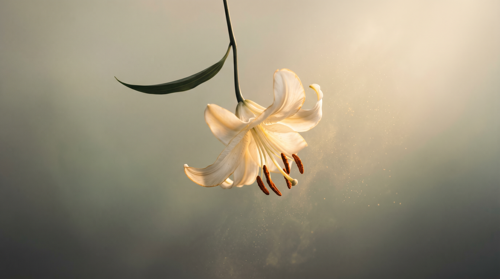
Nagel’s decision to return to the lily was a personal one. The original Barénia featured a butterfly lily as a floral facet, but the use of white lily for Pleine Fleur proved an entirely different proposition. In its raw form, the white lily carries a deep sweetness as well as “very fatal”, a whiff of death that is down to its high concentration of indolic compounds, also found in decaying organic matter. "I wanted to bring something more smiling to the fragrance," she explains. " I said to myself, how can I soften the lily?" The answer, as is often the case in perfumery, came through contrast. Working through multiple iterations, Nagel landed on orange blossom, the diametric opposite of the white lily’s heady strength. As she puts it, orange blossom is “almost virginal”, a flower of innocence rather than seduction. And yet, something in its sweet strength proved capable of softening the lily’s more powerful qualities. "It's strong enough, somehow, to make the white lily more smiling," she says. "I love that floral association."
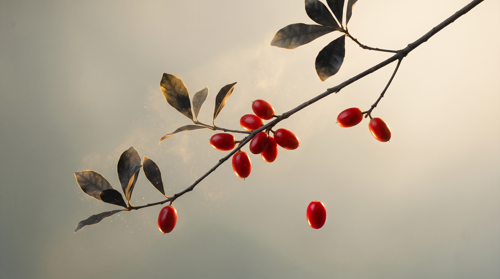
The inclusion of the miracle berry rounds off Pleine Fleur – a note Nagel first encountered in a childhood fairy tale – but obtaining any yield from the fruit proved tricky. “When I did extracts from the miracle berry, it refused to give in to me! I got just a droplet.” Undeterred, Nagel had the droplet analysed, studying its molecular structure: what she found was something approximating a dry apricot, with a velvety sweetness and a hint of tang. Working with Miracle Berry, a flower with its own fruity, apricot-adjacent character and a leathery undertone that connected naturally with the fragrance's equestrian foundations, she reconstructed something the natural world had declined to provide. "Nothing is impossible," she says. "Either nature gives it to me, or I have to reinvent it. But that's fun too."